
A lot of adults grow up with a very limited idea of what ADHD looks like.
They picture someone who is always restless, always interrupting, or always getting in trouble.
Because of that, many people miss the real signs of adult ADHD in themselves for years.
They do not see their experience in the stereotype.
They just think life feels harder than it should.
They think they are bad at routines, bad at staying organized, bad at following through, or bad at handling normal adult responsibilities.
What often gets missed is that ADHD in adulthood can show up in much quieter ways.
Sometimes it looks like a busy mind that never fully settles.
Sometimes it looks like struggling to start simple tasks even when you care about them.
Sometimes it looks like being smart and capable but still feeling like everyday life takes too much effort.
That is why so many adults do not realize ADHD may be part of the picture until much later.

ADHD in adults is not always obvious
A lot of adults with ADHD were never disruptive enough to draw attention.
Some were quiet students who drifted off during class.
Some were bright enough to get by without much structure until life became more demanding.
Some were described as emotional, inconsistent, disorganized, or forgetful, but nobody stepped back to ask why.
This is one reason the signs of adult ADHD are so often misunderstood.
The struggle may not look dramatic from the outside.
It may look like someone who is always rushing, always trying to catch up, always making lists, or always apologizing for forgetting something.
It may look like someone who gets things done, but only through stress, last-minute pressure, or mental exhaustion.
That kind of pattern is easy to dismiss.
But it matters.
Trouble starting tasks is one of the biggest signs
Many adults assume ADHD means not paying attention.
In reality, one of the hardest parts is often getting started.
A task can be important, urgent, and completely understood, and the person still feels stuck.
They may sit there thinking about it.
They may feel guilty about it.
They may even want to do it.
And still, they cannot seem to begin.
This is where executive dysfunction becomes such an important part of the conversation.
It is not about laziness.
It is not about not caring.
It is the gap between intention and action.
That gap can affect work, errands, paperwork, emails, household tasks, appointments, and even things a person genuinely wants to do.
It is one reason many adults start wondering whether something deeper is going on.
For people exploring ADHD support for adults, this is often one of the first patterns that starts to make sense.
Forgetfulness can feel embarrassing and personal
Another common part of adult ADHD is memory trouble in everyday life.
A person may forget appointments, lose track of conversations, misplace important items, or walk into a room and forget why they went there.
They may mean well and still forget to text back, finish a form, or follow through on something that matters.
This kind of forgetfulness in adults can be deeply frustrating.
It can also be painful.
Over time, people start taking it personally.
They think it means they are careless or unreliable.
They feel ashamed that they cannot seem to keep track of ordinary things the way other people do.
That shame can build quietly over years.
What makes it harder is that many adults with ADHD care a great deal.
They are not forgetting because they do not value people or responsibilities.
They are often juggling too much mentally, and the system breaks down under pressure.
Emotional reactions can be stronger than people expect
A lot of people do not realize ADHD can affect emotions too.
They think of it as a focus issue only.
But many adults with ADHD feel things intensely.
They may become frustrated quickly.
They may feel rejected more deeply.
They may have a hard time shifting gears when upset.
They may also feel ashamed about how strongly they react.
This is where emotional dysregulation can become part of the experience.
It may show up as irritability, emotional flooding, low frustration tolerance, or feeling like small problems hit much harder than they seem to hit other people.
This does not mean the person is dramatic.
It means their nervous system may be working harder to regulate attention, stress, and emotion at the same time.
That emotional strain often affects relationships too.
A person may forget something important, feel bad about it, then become overwhelmed by guilt or defensiveness.
Without understanding the pattern, both they and the people around them may misread what is happening.
That is one reason broader mental health services can be helpful when ADHD overlaps with stress, anxiety, or relationship strain.
Overwhelm is often constant, not occasional
Many adults with ADHD live with a near-constant sense of mental traffic.
There is always something unfinished.
Always something to remember.
Always something they are trying not to drop.
That can create real chronic overwhelm.
Even simple tasks can start to feel heavy when there are too many moving parts.
Doing laundry, answering emails, making an appointment, paying a bill, following up on a message, planning dinner, and getting through work can all pile up into one giant wall of pressure.
From the outside, those tasks may look manageable.
Inside, they can feel paralyzing.
This is where adults often start calling themselves lazy or irresponsible.
But very often, the issue is not a lack of effort.
It is the mental load of trying to manage everything without the right support or understanding.
When that has been happening for years, exhaustion becomes normal.
ADHD can hide behind high achievement
One of the reasons the signs of adult ADHD go unnoticed is that many adults are high-achieving.
They have careers.
They meet deadlines, at least eventually.
They show up for people.
They look successful.
But success does not cancel out struggle.
In many cases, successful adults are just compensating constantly.
They may rely on pressure to perform.
They may stay up too late to finish what others finished earlier.
They may overprepare because they do not trust themselves to remember things.
They may seem organized only because they have built elaborate systems to avoid falling apart.
That is still a struggle.
And it is still worth understanding.
A person does not need to be visibly failing for ADHD to be affecting their quality of life.
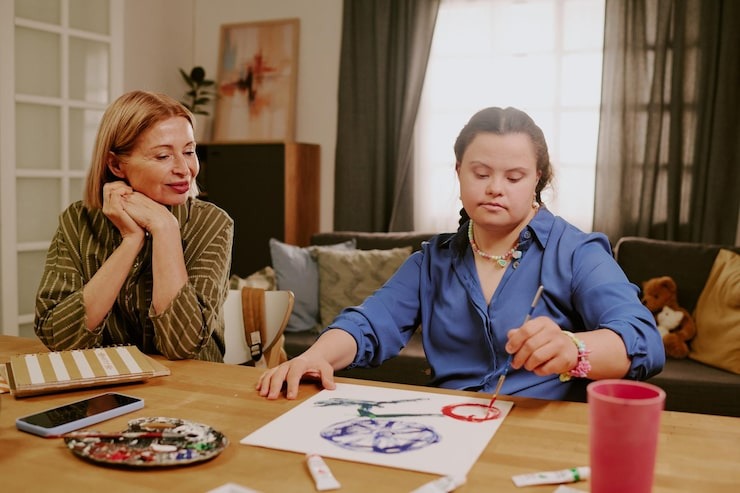
It can show up differently in work, relationships, and home life
At work, ADHD may look like missed details, procrastination, poor time awareness, or difficulty switching between tasks.
In relationships, it may look like forgetting important things, zoning out in conversations, interrupting without meaning to, or becoming emotionally flooded during conflict.
At home, it may show up as clutter, unfinished chores, avoidance, and routines that never seem to stick.
Because the patterns change depending on the setting, adults often miss the bigger picture.
They focus on each problem separately.
They think they are bad at work stress, bad at relationships, or bad at home organization.
They do not always realize the same underlying issue may be running through all of it.
That is why a thoughtful assessment matters.
The goal is not just to look at one symptom.
It is to see how the whole pattern has been shaping daily life.
A careful approach should look at the whole person
A good evaluation should not reduce someone to a checklist.
It should look at current symptoms, earlier life patterns, emotional health, family history, stress, and the way daily functioning is actually being affected.
That whole-person approach matters because adults are complex.
Some have ADHD and anxiety.
Some have ADHD and depression.
Some are also dealing with burnout, parenting stress, or longstanding self-criticism that makes everything heavier.
This is why thoughtful medication management and supportive therapy can matter so much when ADHD is part of a broader picture.
Care should be intentional.
It should fit the person, not just the label.
And it should take into account how attention struggles affect mood, confidence, relationships, and daily routines.
That fuller perspective is often what helps adults feel seen for the first time.
Clarity can change the way people see themselves
For many adults, learning about the real signs of adult ADHD is emotional.
They start looking back at years of difficulty through a different lens.
They realize they were not simply careless.
They were not just lazy.
They were not broken.
They may have been dealing with ADHD in ways nobody recognized clearly.
That shift in understanding can be powerful.
It does not erase the frustration of the past.
But it can soften the self-blame.
It can help people understand why so many ordinary things have felt harder than they seemed.
And it can open the door to more useful support.
For adults looking through the broader conditions we treat, that kind of clarity is often the start of a much more compassionate relationship with themselves.
ADHD is often quieter, more layered, and more personal than people expect
The biggest problem with stereotypes is that they make people miss what is right in front of them.
ADHD in adulthood is not always loud.
Sometimes it is a quiet pattern of unfinished tasks, scattered thoughts, emotional intensity, forgotten details, and everyday mental exhaustion.
Sometimes it is years of trying harder without understanding why life still feels so difficult.
That is why the real signs of adult ADHD deserve more attention.
Not because everyone who feels overwhelmed has ADHD.
But because many adults have spent too long blaming themselves for patterns that needed understanding, not judgment.
When those patterns finally make sense, people often feel something they have not felt in a long time.
Relief.