A lot of people hear words like holistic and evidence-based and are not fully sure what they mean in actual care.
Sometimes holistic sounds vague.
Sometimes evidence-based sounds cold.
In real life, good mental health care should feel like neither of those things.
It should feel thoughtful.
It should feel grounded.
And it should feel like your provider is paying attention to the full picture, not just one symptom on one difficult day. Mental health is shaped by emotional, psychological, and social factors, and evidence-based practice in psychology is meant to combine research, clinical expertise, and the patient’s own characteristics, culture, and preferences.
That is the heart of holistic psychiatry Michigan when it is done well.
It does not mean ignoring science.
It means using science carefully while still treating the person like a person.

Holistic care does not mean vague care
A lot of people assume holistic care means something soft or undefined.
That is not what it should mean.
A holistic approach means your mental health is not being looked at in isolation.
It means your provider is thinking about your symptoms, but also your relationships, stress level, life stage, medical history, family history, sleep, environment, and the everyday pressures that shape how you feel. Major public health and mental health sources describe mental health as connected to social well-being and affected by broader life conditions, not just isolated internal symptoms.
That matters because people do not live in pieces.
Anxiety does not happen in a vacuum.
Depression does not happen in a vacuum.
ADHD does not happen in a vacuum either.
A person may be dealing with symptoms, but they are also living inside a real life with work stress, parenting, conflict, grief, burnout, health concerns, and all the pressure that comes with being human.
That fuller view is what makes care feel more honest.
Evidence-based does not mean one-size-fits-all
This is where people often get the wrong idea.
They hear evidence-based psychiatry and assume it means a rigid formula.
In reality, evidence-based care is supposed to be more thoughtful than that.
It means using the best available research, but also applying clinical judgment and making room for the patient’s own goals, values, and context. That three-part model is built directly into the APA’s description of evidence-based practice.
So if two people both have anxiety, that does not automatically mean they need the exact same plan.
If two adults both have ADHD, that does not mean their care should look identical either.
One person may need more support with sleep.
Another may need help sorting out whether anxiety is overlapping with attention issues.
Another may need a careful look at trauma, parenting stress, or years of burnout.
The research matters.
But the person sitting in front of you matters just as much.
Good care should make room for context
This is one of the biggest differences between rushed care and thoughtful care.
Rushed care often focuses only on symptoms.
Thoughtful care asks where those symptoms are happening and what they are attached to.
A person may say they are anxious.
That matters.
But it also matters whether they are newly postpartum, overwhelmed at work, stuck in a painful relationship, sleeping badly, struggling with ADHD, or carrying years of unaddressed stress.
A person may say they are depressed.
That matters too.
But it also matters whether they are burned out, isolated, grieving, dealing with chronic self-criticism, or feeling emotionally flattened after a long period of just trying to survive.
That is why personalized mental health care matters so much.
People do not just need treatment for symptoms.
They need care that makes sense of the life those symptoms are happening inside.
Medication and therapy should not be treated like opposites
A lot of adults come into mental health care thinking they have to pick a side.
Either medication or therapy.
Either practical support or emotional support.
That split is often too simplistic.
In real life, many people benefit from a combination.
For some, therapy helps them understand patterns, relationships, and emotional habits that keep them stuck.
For some, medication reduces enough distress that they can finally think more clearly and function with less struggle.
For others, both matter.
That is one reason medication and therapy often work best when they are seen as part of the same conversation rather than competing approaches. National guidance on mental health treatment and ADHD treatment also describes care as often involving more than one modality rather than a single tool.
At Resilience, that combined model is already part of the way the practice presents itself through services, medication management, and light talk therapy for adults in Michigan.
A holistic approach should still be practical
Holistic care should not feel abstract.
It should lead to practical decisions.
If anxiety is being made worse by poor sleep, that should matter.
If ADHD symptoms are affecting work, relationships, and confidence, that should matter.
If a person’s family history, medical background, or current stressors change how treatment should be approached, that should matter too.
This is where holistic psychiatry Michigan becomes more than a nice phrase.
It becomes a way of making treatment more accurate.
Not broader for the sake of sounding thoughtful.
Broader because accuracy depends on seeing the whole person.
That is one reason Resilience’s own site emphasizes getting to know the individual, not just the diagnosis, and pairing medication management with light talk therapy through telehealth.
Mental health symptoms often overlap
One reason whole-person care matters is that symptoms rarely stay in neat boxes.
An anxious adult may also be dealing with ADHD.
A person seeking ADHD support may also be carrying depression, insomnia, panic symptoms, or relationship strain.
Someone struggling after childbirth may need support that takes both emotional health and life transition into account.
That is why a provider should not rush to treat one label while ignoring the rest of the picture.
A more thoughtful approach looks at how symptoms interact.
It asks which problems came first, which ones are feeding each other, and what is making daily life hardest right now.
For adults reading through the conditions we treat, that overlap is already visible on the site. Resilience lists ADHD, anxiety, depression, insomnia, OCD, panic disorder, perinatal concerns, and mood-related support among its treatment areas.
Telehealth can still feel personal
Some people worry that online care will feel distant or impersonal.
That concern is understandable.
But good telehealth psychiatry Michigan should still feel human.
It should still feel collaborative.
It should still leave room for careful follow-up, honest conversation, and treatment that adapts over time.
For many adults, telehealth actually makes care more realistic.
It removes travel barriers.
It makes follow-up easier.
And it can help people stay more consistent with treatment in the middle of work, family life, and everything else they are already balancing.
Resilience’s site is built around telehealth medication management and light talk therapy in Michigan, which fits that need for accessible, ongoing care.
Thoughtful care should feel collaborative
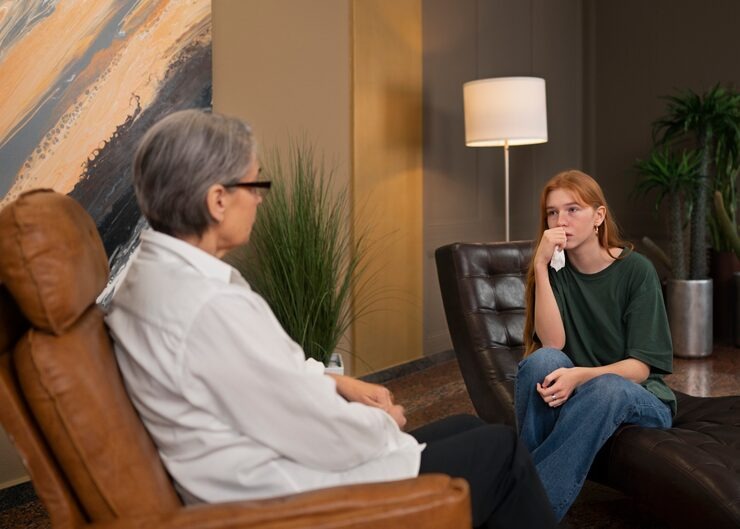
One of the clearest signs of good mental health care is that the patient does not feel talked at.
They feel included.
They understand why something is being recommended.
They have room to ask questions.
They feel like their concerns are being taken seriously, not brushed aside.
That matters in psychiatry.
It matters in therapy.
And it matters especially when medication is being considered.
The goal should not be to force someone into a plan.
It should be to build a plan with them.
That is part of what makes personalized mental health care feel different from generic care.
It respects that treatment works better when the person understands it, trusts it, and sees how it connects to their own life. Person-centered mental health models and evidence-based practice both emphasize collaboration, patient values, and care that supports overall well-being rather than symptoms alone.
The goal is not just symptom control
Most people want relief from symptoms.
Of course they do.
But they usually want more than that too.
They want to function better.
They want more steadiness.
They want clearer thinking, better sleep, less internal chaos, healthier relationships, and a life that does not feel so hard to manage.
That is why holistic psychiatry Michigan should never be about reducing a person to a checklist.
It should be about helping them feel more like themselves again.
For some people, that means careful medication decisions.
For some, it means light talk therapy.
For many, it means both, along with treatment that actually considers their full story.
That kind of care is what people are often looking for when they read an about page and want to know whether a practice will really see them. Resilience’s current messaging repeatedly centers individualized, holistic, evidence-based support through telehealth rather than symptom-only care.
When care feels more human, it usually feels more useful
People do not need mental health care that sounds impressive but feels disconnected.
They need care that is grounded, clear, and human.
They need a provider who can take symptoms seriously without losing sight of the person carrying them.
They need science without coldness.
They need compassion without vagueness.
That is what a good holistic, evidence-based approach should feel like.
Not trendy.
Not generic.
Just careful, intentional, and genuinely useful.
And for many adults, that kind of care is the difference between feeling managed and actually feeling understood.